Work/game
DeckX
An exchange disguised as a card game — every card is a stock.
Open testing — sit at the table if you want to try it. Blind auctions every 15 seconds, flea markets, five hidden extraction targets.
Try the table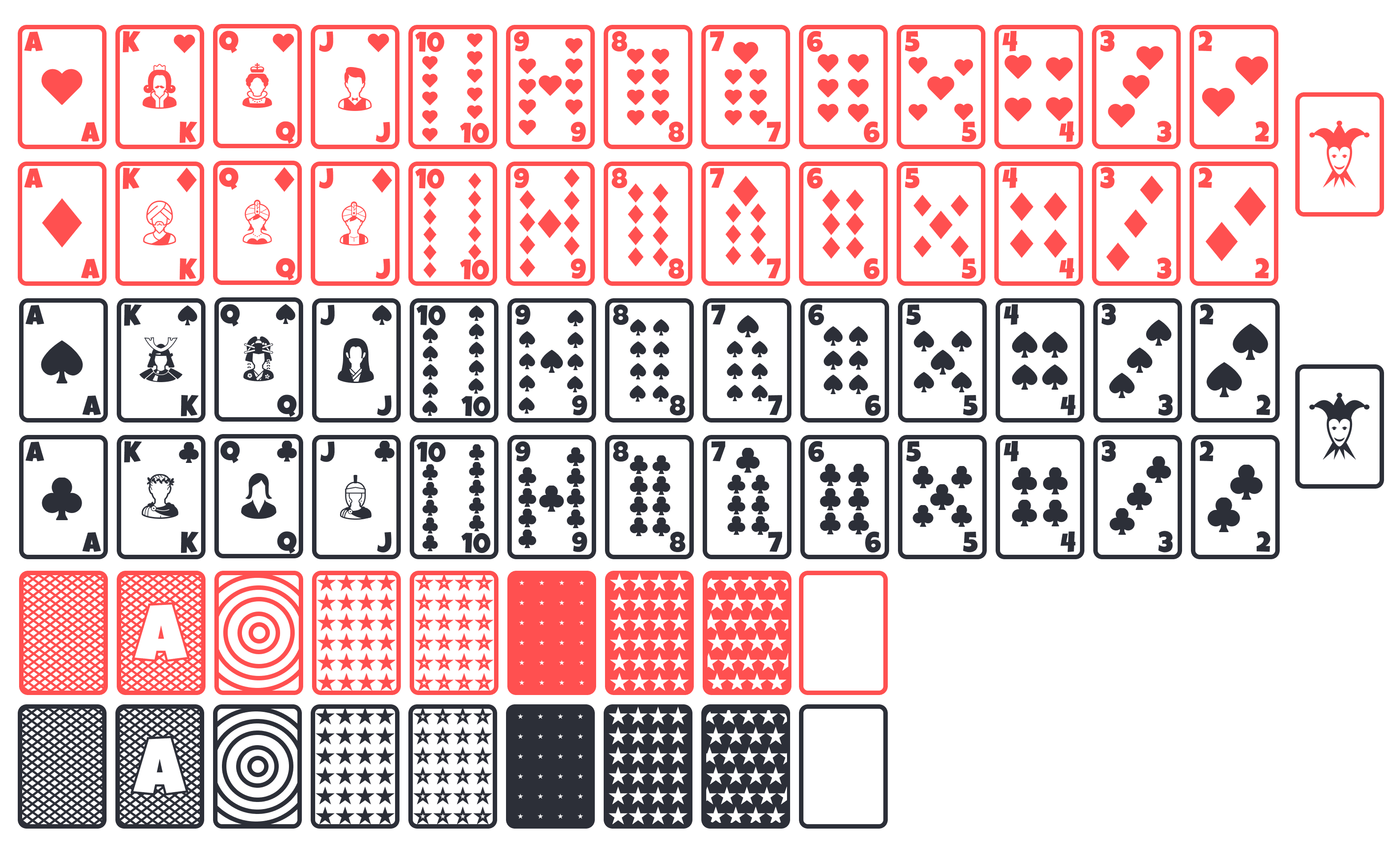
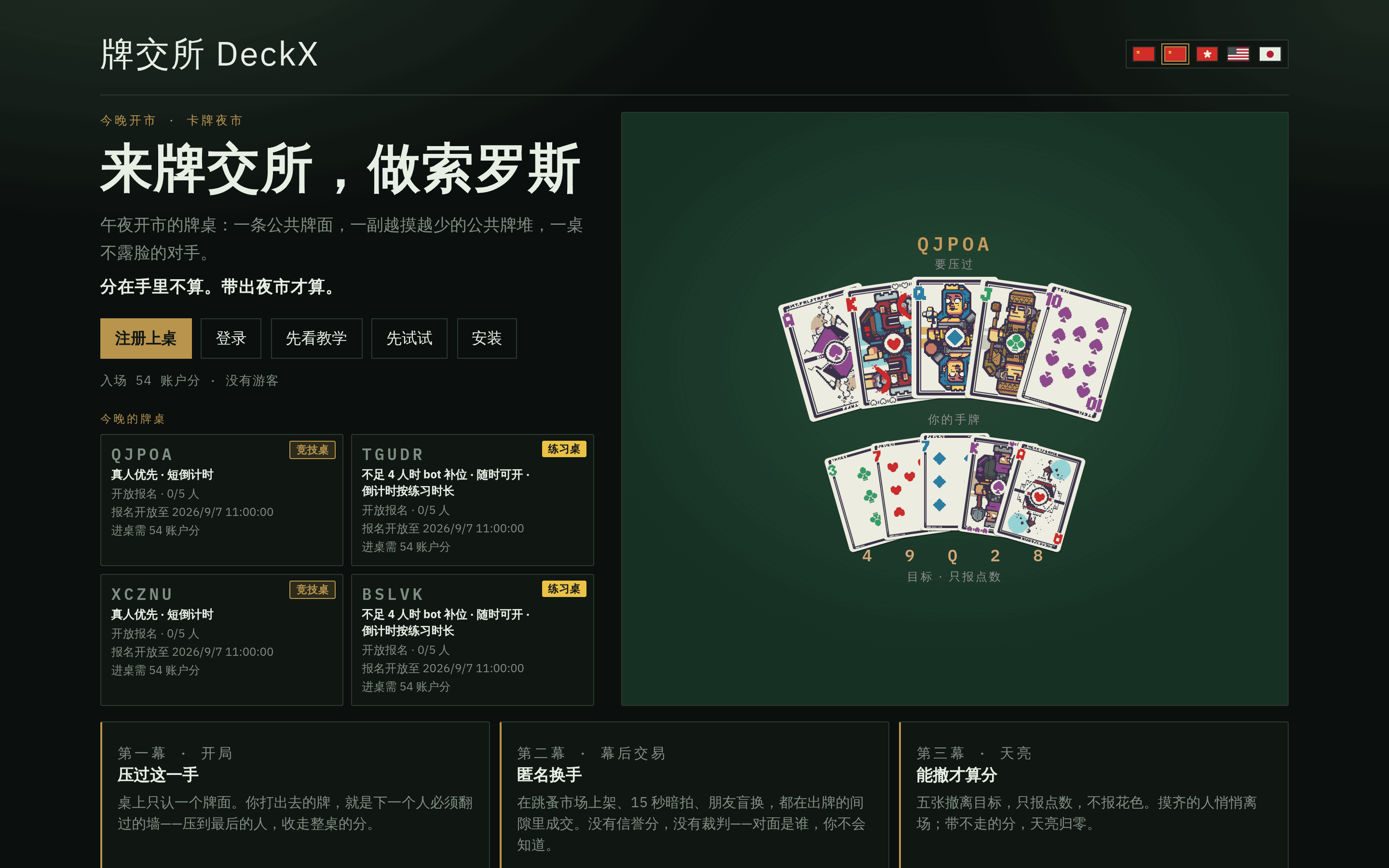
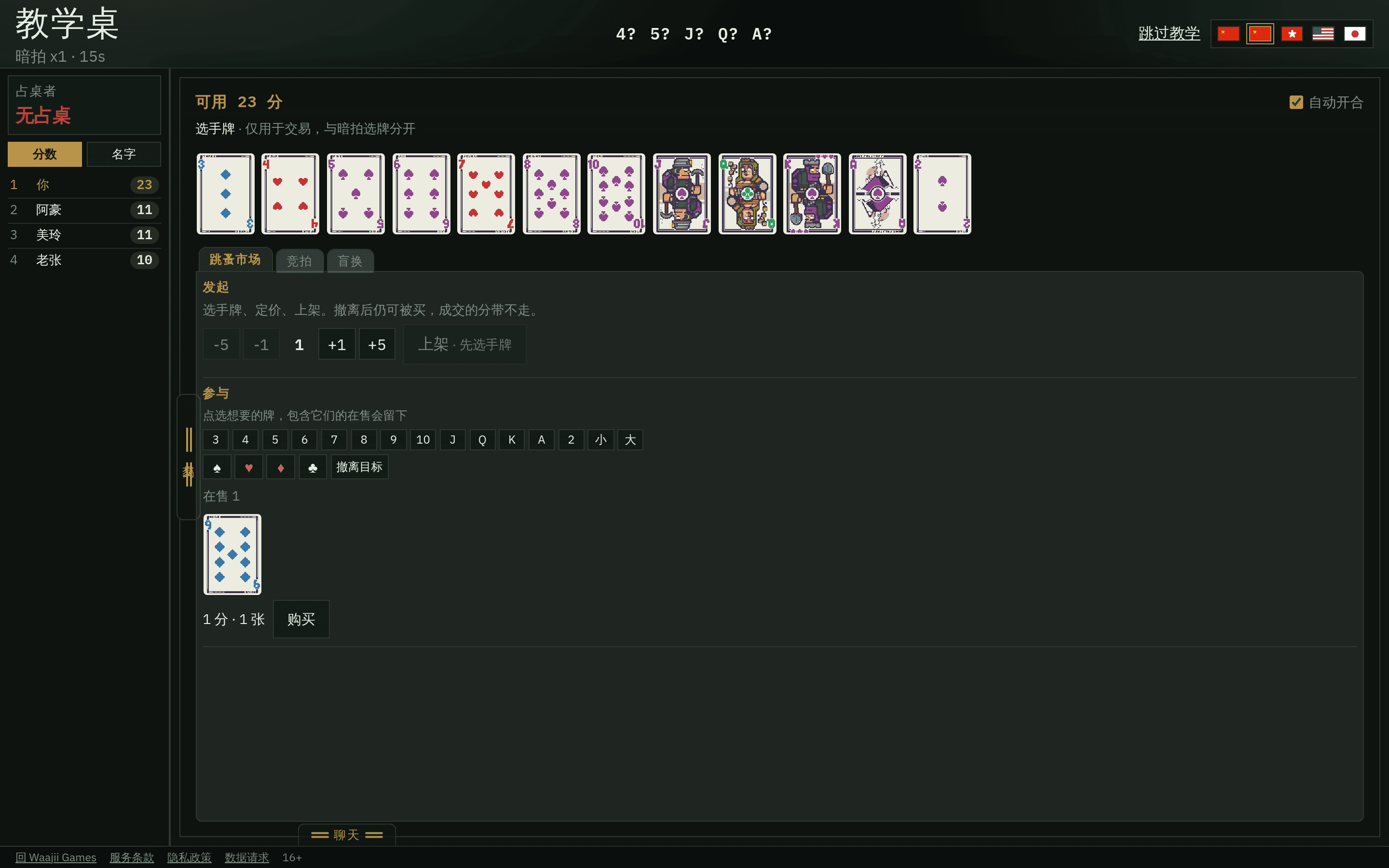
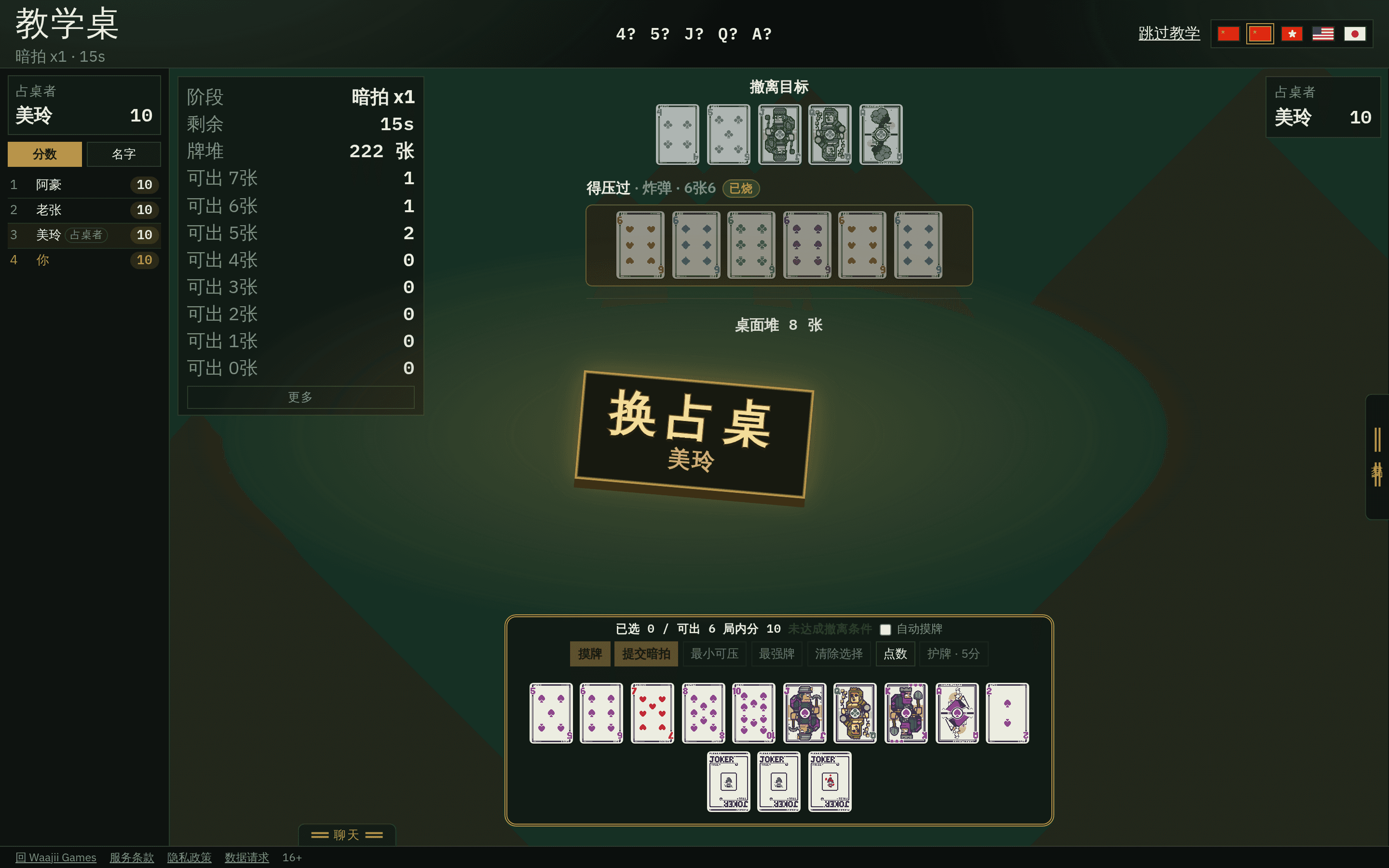
DeckX is in open testing. The table is live at deckx.waajiigames.com — sit down if you want to try it. Rules and session feel are still being proven with real players.
DeckX looks like a card game the way a shark looks like a fish. Every card is a stock. Every hand is a position. The table is one long chain of bets, blind auctions every fifteen seconds, and somewhere in the deck, five hidden identities worth everything.
You may play it like a trader, a sniper, or a liar — the rules do not care. They only care whether you extract in time, because everyone still holding cards when the session ends leaves with zero. The house's own slogan is an invitation: come to the Deck Exchange — be a Soros.
One table, one chain, no player cap: five people can open a session, and the table keeps accepting players until it ends. Sessions run in fixed two-hour windows, twelve a day, and every window is a small market forming from strangers — a live test of whether reflexivity holds when it is played, not lectured.
“This is not a card game. This is an exchange.”
- players to open — no cap
- 5+
- players to open — no cap
- blind auction windows
- 15s
- blind auction windows
- fixed session windows
- 2h
- fixed session windows
- market tax
- 0%
- market tax
01
The premise
This is not a card game; it is an exchange. Each card is a stock with a face value, a hand type, a trading premium, and a hidden identity. Players play the roles of snipers, traders, and con artists — the game is designed for those who read the table, not those who play fair.
02
Reflexivity, playable
George Soros built a fortune on a two-way connection between thinking and reality. His own formulation: 'The participants' views influence the course of events, and the course of events influences the participants' views. The influence is continuous and circular; that is what I call reflexivity.' Most markets try to hide this loop. DeckX is built to expose it: a card's value is not fixed, it is negotiated — every blind auction is a crowd forming a belief, and every belief moves the price that formed it. The players are not trading cards. They are trading their own expectations, and the game records what that does.
03
One chain, no cap
Every session is a single table, a single chain, and a single public pile. Five players are enough to open; there is no upper limit — players join mid-session until the final fifteen minutes. The bigger the crowd, the thicker the chain, the higher the stakes.
04
Blind auctions
Every new face on the table opens a 15-second blind auction window. Any player who can legally beat the current face and has enough play quota may secretly commit a hand. When the window closes, all legal plays enter the pile; the highest tier becomes the new face, and ties share the table.
05
Markets
Between auctions, players run a flea market (no tax, anonymous, any bundle), auctions (five-minute rounds with escrow and auto-extension), and friend blind-trades (N for N, sight unseen). All trades are tax-free; fraud, reneging, and collusion are the players' own business — the system offers no reputation, no refunds, and no arbitration.
06
Extraction
At the start, the system draws five hidden extraction targets and reveals only their values — never their suits. Played cards permanently unlock identities; held cards unlock them temporarily. The first player to extract reveals all suits to the table. The session ends when more than half of all players have extracted — and anyone still at the table when it ends scores zero.
07
Design principles
The rules are built on a few convictions: a card is a point, a tool, and a key at once; every legal play enters the pile, not just the highest; participation pays a fixed dividend; playing costs quota; and only extraction converts assets into score. Certainty over chaos — every state change is decided and recorded by the server.
08
Sessions & numbers
Sessions open every two hours on the hour, twelve per day. Five players start a 30-second opening countdown; the table accepts mid-session joiners until fifteen minutes remain. New players inject a full 54-card deck, draw 13 cards, start with 10 points and a play quota of 5 (capped at 7). Hand limit is 20; each 15-second window offers one optional draw. Auctions run five minutes with three 30-second extensions; blind-trades expire after 60 seconds; market tax is zero across the board.
09
Social reading
DeckX is designed to be read socially. Georg Simmel described the stranger as someone near and far at the same time — close enough to trade with, distant enough to distrust. DeckX is a market of strangers by design: the flea market hides seller identity, auctions hide it too, and friend blind-trades show only quantities. Public chat and private messages let players promise, lie, and negotiate — but promises are never contracts. Fraud, collusion, and double-crossing are legal moves. The system records everything and arbitrates nothing.
Find it