Work/project
Investment Lesson
Money, taught through practice.
Run your own income, inflation, and drawdown through a chapter loop — free core stages, AI mastery review, optional Python labs.
Open the product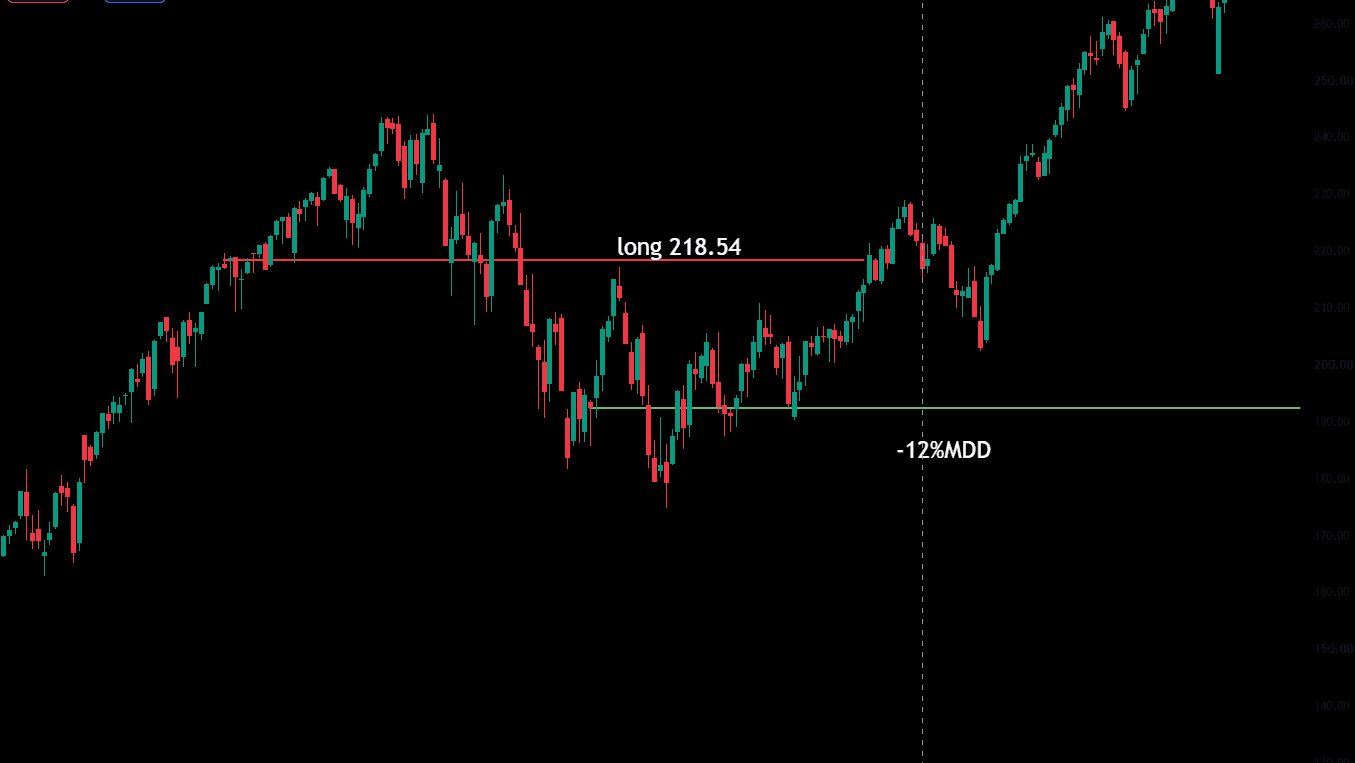
Investment Lesson is Waajji's public money-education project — a course that teaches finance and mathematics together. Not 'learn math first, invest later': each chapter advances financial understanding and mathematical tools at the same time, so what you learn is usable the same day.
Built for people starting from zero, it needs no programming background. You read, test yourself against a question bank, get an AI learning review of your weak points, and — optionally — run Python experiments that solve your own money questions, with your own numbers.
The first stages are free. Money is taught through practice, and practice is the only teacher that leaves a receipt.
“Money, taught through practice.”
- stages planned
- 15
- stages planned
- stages open now
- 4
- stages open now
- parts per chapter
- 7
- parts per chapter
- questions per chapter
- 100+
- questions per chapter
01
Money through practice
The course is built on a single loop: read a chapter, test yourself, get an AI learning review with a mastery radar, then experiment. Money is not taught as theory — it is taught through practice, with each chapter ending in tools you can apply to your own numbers.
02
Seven-part chapters
Every chapter follows a seven-part structure: a real-world story, financial understanding, the mathematics behind it (with formulas and worked examples), a chapter question bank, an AI learning review, an optional Python experiment, and recommended resources. Chapters carry 15 to 100+ questions each, from multiple choice to scenario judgment.
03
AI learning review
After each chapter, the AI produces a Chapter Learning Report: a total score (60+ passes, 80+ excellent), a radar chart of mastery across topics, your weak points with links back to the source text, misconception diagnosis, and review suggestions. The review judges understanding only — it never gives buy or sell advice.
04
The bias in the room
The course teaches the mathematics of money — but money is not decided by mathematics alone. Daniel Kahneman and Amos Tversky's prospect theory showed that losses loom larger than gains: the pain of losing ¥100 outweighs the pleasure of winning the same amount by roughly two to one, and the asymmetry is felt before it is reasoned about. That single bias explains panic selling, holding losers too long, and chasing rallies. Investment Lesson teaches the formulas and then the failure modes of the mind that uses them — because a calculator is only as rational as the person pressing the buttons.
05
Python experiments
Experiments run in the browser — no local Python required. You can upload your own data: income and expense CSVs, portfolio holdings, mortgage cash flows, product brochures. The experiments solve your problems, not textbook ones.
06
An open path
The course is planned in fifteen stages. Stages one to three (economic thinking and money arithmetic, inflation and practice, probability and risk) are free and required; stage four ties them together with a one-page personal decision worksheet; later stages cover bonds, portfolios, options, and backtesting as they ship.
07
Stage map
Stage one builds economic thinking and money arithmetic — compound interest, present value, the rule of 72, balance sheets. Stage two turns to inflation and practice — CPI, real interest, IRR, mortgages. Stage three enters probability and risk — expectation, variance, Sharpe, drawdown, VaR, fat tails. Stage four is the practical capstone: one sum of money traced from where it comes from to whether it can hold its ground. Later stages open the map further: reading products, fundamentals, valuation memos, bonds, portfolios, options, and backtesting.
08
Free at the core
The course is deliberately open. Stages one through three are free for everyone — no account walls on the core path. Stage four is a paid capstone; advanced stages and electives are sold separately. The model is simple: the public good is the first three stages, and the studio's work is funded by the people who want to go further.
Find it